
Replace a Damaged Driver’s License: When the DMV Forces You to Act
Blog post description.
1/7/20262 min read
Replace a Damaged Driver’s License: When the DMV Forces You to Act
A damaged driver’s license doesn’t always look like an emergency — until it stops working.
Barcodes don’t scan. Photos fade. Cards crack.
Suddenly, what was acceptable becomes unusable.
This guide explains when a damaged driver’s license must be replaced, how the DMV treats damage, and how to avoid being caught off guard at the worst possible moment.
What the DMV Considers a “Damaged” License
To the DMV, a license is damaged when it is:
Cracked or broken
Warped or bent
Water-damaged
Faded or unreadable
No longer scannable
It doesn’t matter if your name is still visible.
If the card can’t be reliably verified, it’s a problem.
Why Driving With a Damaged License Is Risky
Many people keep using a damaged license, assuming it’s fine.
The risk:
Law enforcement may not accept it as valid ID
Rental agencies may refuse it
Employers may reject it
The DMV may force replacement later — under pressure
Waiting rarely helps.
Replacement vs Renewal: Don’t Choose Wrong
A damaged license almost always requires a replacement, not a renewal.
Choosing renewal instead of replacement can:
Trigger document mismatches
Force in-person visits
Delay issuance
If the card is damaged, you’re reissuing the same license — not extending it.
Can You Replace a Damaged License Online?
Sometimes — but not always.
Online replacement may work if:
The license is only lightly damaged
Your information hasn’t changed
Your state allows it
In-person replacement is safer if:
The damage is severe
The barcode won’t scan
Your photo is unreadable
You lack backup ID
If the card itself can’t be verified, human review is usually required.
What Documents Matter Most in Damage Cases
Unlike lost or stolen cases, you still have the license — and that helps.
Bring:
The damaged license itself
One strong secondary ID
Proof of current address
The damaged card anchors your record — but only if it’s still legible.
Common Mistakes That Slow Damaged-License Replacements
People often:
Keep using a failing card too long
Try to renew instead of replace
Apply online when the card can’t be verified
Show up without backup ID
Each mistake adds friction.
Temporary Licenses and Damaged Cards
Some states issue temporary licenses during replacement.
Important:
Temporary does not override unresolved verification issues
Final issuance still depends on approval
Treat temporary licenses as provisional.
When the DMV Forces Replacement
The DMV may force replacement when:
The card won’t scan
The photo no longer matches you
The card fails verification
The license is rejected by third parties
At that point, speed matters.
The Smart Way to Handle a Damaged License
The best strategy is proactive:
Replace early, not under pressure
Choose replacement, not renewal
Decide online vs in-person realistically
Bring backup ID
Doing this on your timeline is easier than doing it on the DMV’s.
Why This Situation Catches People Off Guard
Most guides focus on lost or stolen licenses.
Damaged cards are treated as an afterthought — until they fail.
That’s why people get stuck unexpectedly.
Want the Full Replacement Strategy?
This article explains damaged licenses, but not:
State-by-state rules
REAL ID implications
Replacement without ID
Rejection recovery
Final approval checklists
That’s exactly what the complete guide covers.
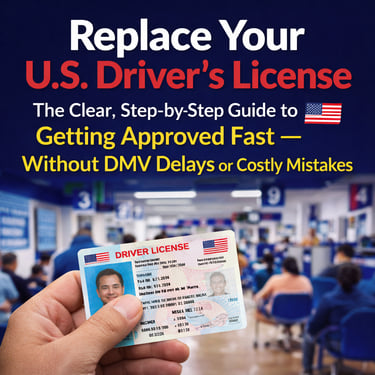
👉 Replace Your U.S. Driver’s License
The Clear, Step-by-Step Guide to Getting Approved Fast — Without DMV Delays or Costly Mistakes
With 60+ pages of practical instructions, the full guide walks you through every replacement scenario so you’re never caught unprepared.
Replace early.
Replace correctly.https://replacedriverslicenseusa.com/replace-drivers-license-guide
Help
Need assistance? We're here to guide you.
Contact
infoebookusa@aol.com
© 2026. All rights reserved.